Uganda's most remote and most beautiful park, in the dry, ochre grasslands of Karamoja. It is not the easiest park to reach, and that is rather the point.
Uganda's most remote and most beautiful park, in the dry, ochre grasslands of Karamoja. It is not the easiest park to reach, and that is rather the point.
Kidepo Valley National Park lies in the far north-east of Uganda, in the semi-arid grasslands of Karamoja, hard against the border with South Sudan and Kenya. At 1,143 square kilometres it is the smallest of Uganda's savanna parks, and the most remote.
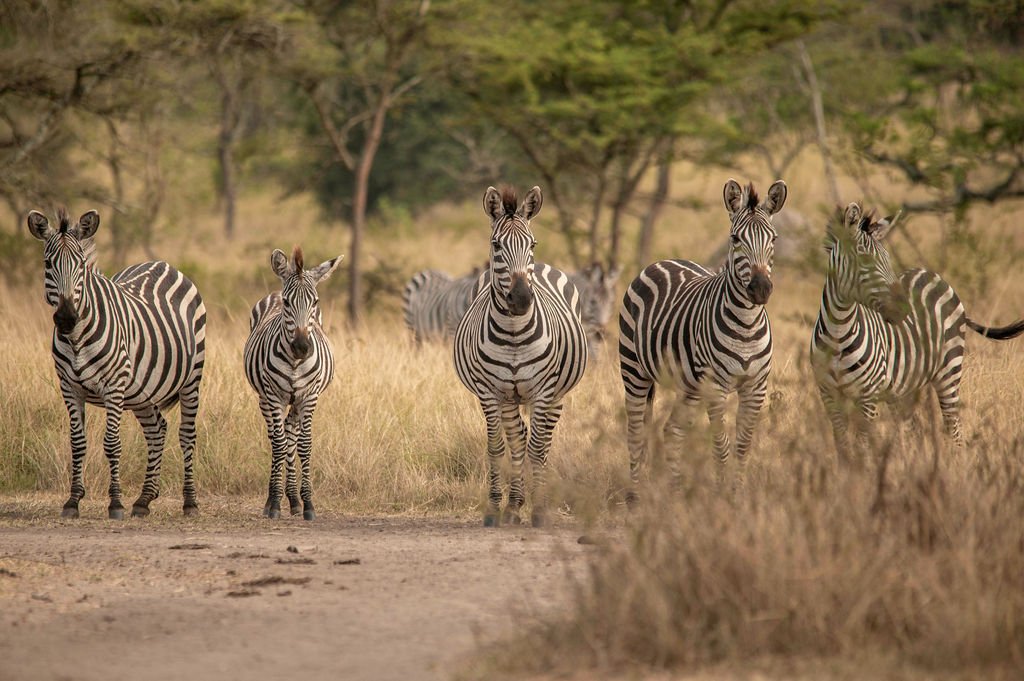
The valley floor is a wide, flat, golden grassland enclosed by rugged mountains. Uganda's only true savanna landscape sits here, and it looks like the photographs of East Africa that most people only ever see. Acacia woodland breaks the plain, and dry riverbeds cut through it.
The wildlife is exceptional and unusually open. Large prides of lions hunt here, cheetah are found in the Narus Valley, and the park supports elephant, giraffe, greater kudu, ostrich, oribi, topi, kob, buffalo and a full complement of predators. Birding here is exceptional, with well over 550 species recorded.
Roads within the park are unpaved and the park closes during the long rains, usually from May to October. Almost everyone visits between October and February. You will be one of very few vehicles here, which is the whole appeal.

Uganda's most remote and most beautiful park, in the dry, ochre grasslands of Karamoja. It is not the easiest park to reach, and that is rather the point.
Kidepo holds Uganda's largest lion population and prides of twenty or more are recorded, hunting cooperatively on the Narus plains. In a park this size that is genuinely rare.
The Narus Valley grasslands are one of the better places in Uganda to see cheetah, and leopard are found in the wooded sections around Lodwar and the riverine forest.
The open plain suits the ostrich, and the large kori bustard, Uganda's heaviest flying bird, is regularly seen on the same open grassland.
Giraffe browse along the escarpment, greater kudu patrol the wooded valleys, and small oribi sit in the short grass, often in pairs.
Large herds move between the valley and the surrounding hills, and buffalo herds hold the larger permanent water sources.
Over 550 species recorded, including kori bustard, secretary bird, Hartlaub's turaco and a rich selection of raptors that use the valley as a movement corridor.
Half and full day drives with an armed park guide, on the valley floor and up into the Narus Valley. Roads are rough but the rewards are high.
The open plain makes car-birding unusually productive, with large numbers of bustards, hornbills, rollers and raptors visible from the vehicle.
Guided walking and rhino-tracking-style walking safaris arranged through the lodges, ideal for close detail on tracks and smaller species.
Genets, civets, striped hyena and other nocturnal species are regularly encountered.
Many guests add a visit to a Karamajonga village with a local guide, where the story of the pastoral community and the park's history come together.
Kidepo is a four to five hour drive from Kidepo's airstrip at Apoka, and about three hours from Kibale and Bwindi, which makes it pairable with a chimp and gorilla loop.
Lodges listed are indicative. Tell us your budget and lodge preference and we will match it when we build your itinerary.
| Location | Lodge | Basis |
|---|---|---|
| Apoka (airstrip and valley entrance) | Apoka Safari Lodge | Full Board |
| Apoka | Latitude 0 Degrees | Full Board |
| Narus Valley | Kidepo Valley Lodge | Full Board |
| Narus Valley | Kaiza Lodge | Full Board |
The only practical route. A light aircraft lands at Apoka, and the drive into the valley is about an hour and a half. Most guests arrive via Kihihi or Entebbe.
Overland is a genuine expedition from Kampala, nine to twelve hours via Lira and Soroti, mostly on good tarmac but with long stretches and poor road surfaces further north. Very few self-drive visitors do this.
Kidepo charges a higher park fee than Uganda's other savanna parks, reflecting its remote location. Send us your dates and we will price it in.
October to February. The park closes during the long rains, and access between May and October is restricted or impossible on the northern roads. The dry season also concentrates game around the remaining water.
Roads inside the park are unpaved and rough. A 4x4 with high clearance is standard, and long stretches between sightings are normal. Slow down around livestock, which shares the road.
If you have the time and want somewhere that feels genuinely different from the rest of Uganda, yes. It is the park most likely to be empty when you arrive, and the landscape is unlike anywhere else in the country.
Uganda e-visas are available online, and visas on arrival are issued at Entebbe International Airport. Travellers continuing into Kenya or South Sudan should ask us about the East Africa Tourist Visa.
These are the itineraries our travellers book most often for this destination. All can be adjusted to your dates, pace and budget.